


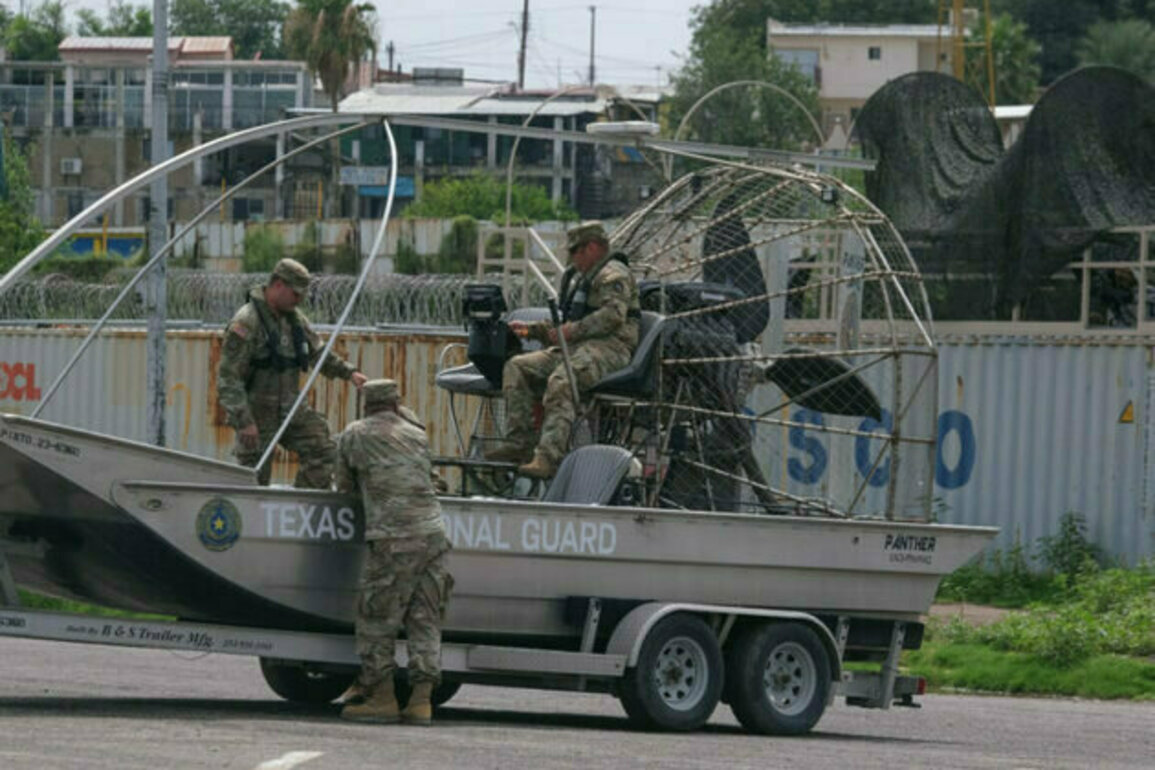
EAGLE PASS, Texas (CN) - On the edge of this small border city, the Rio Grande trudges along the banks of Shelby Park.
On a sweltering recent day in July, people on the Mexican side of the river waded into the water to fish or cool off.
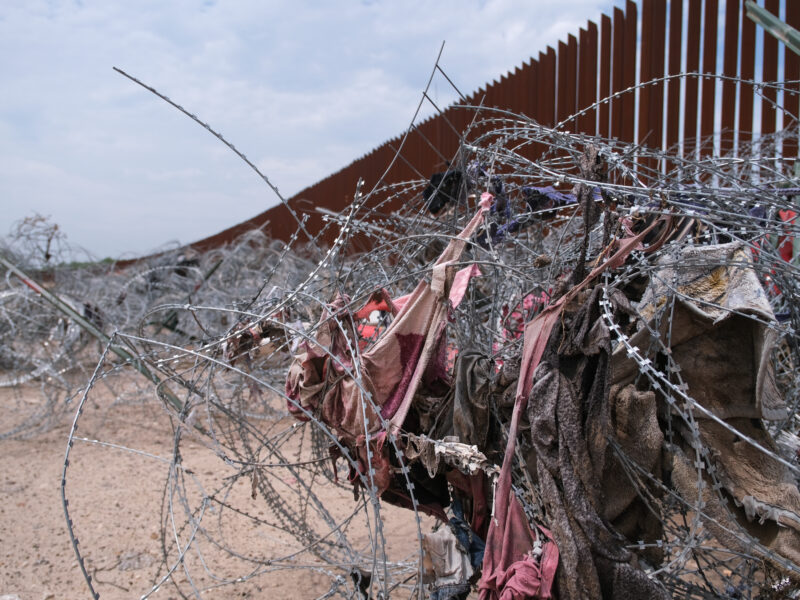
On the Texas side, there's nobody. Instead of people, razor wire decorates tall metal fences and shipping containers.
It is an emotional sight for Jessie Fuentes, an Eagle Pass native and local river guide who runs Epi's Canoe & Kayak Team.
"They took the river from us," Fuentes said in a recent interview at a coffee shop in the city. He wore his trademark river hat, with a bandana tied around his neck.
These fortifications are the legacy of Operation Lone Star, Governor Greg Abbott's $11 billion border-security venture. While the goal of the program was to deter migrants, it's also kept Americans like Fuentes from accessing the Rio Grande.
Four years after Operation Lone Star began, conditions on the border have drastically changed. What was once a near-constant stream of border-crossers has dwindled to a trickle. That has border residents, immigrant advocates and elected officials raising new questions about Operation Lone Star, including its effectiveness, its high price tag and how much longer all of this will continue.
Operation Lone Star began in 2021, during Joe Biden's presidency.
Abbott, a Republican, claimed Biden was failing to secure the border. He took the task upon himself, even though immigration and border-enforcement are the federal government's responsibilities.
Texas State Guardsmen put down hundreds of miles of razor wire and shipping containers. Abbott even waded into international waters, deploying a floating barrier in the Rio Grande.
Although unauthorized crossing is a civil offense, Abbott imposed hefty charges like smuggling and trespassing on migrants who were caught. That led to long detentions and accusations of civil rights violations. In a move that grabbed national headlines, the governor even chartered buses and planes to transport migrants to so-called Democrat-led sanctuary cities.
With each new tactic, Abbott was testing the legal limits of his power over federal border jurisdiction.
Things came to a head in January 2024, when Texas took over Shelby Park and denied Border Patrol entry.
The occupation ended in April, as federal agents and members of the public were allowed back into the park. Still, to the dismay of locals like Fuentes, access to the river has not been restored. The state's footprint remains present here in the form of the makeshift barrier, a smattering of military vehicles, a collection of dark green tents and the occasional whirring of overhead drones.
Fuentes found himself drawn to activism as the border here has become increasingly militarized. During President Donald Trump's first term, he joined the Eagle Pass Border Coalition, a group opposed to new border wall construction.
More recently, Fuentes even sued Abbott over his placement of the floating barrier in the Rio Grande. In his lawsuit, he argues that his river business has been negatively impacted. Looking back at four years of Operation Lone Star, Fuentes says he's most troubled by Texas' treatment of migrants. "We had an opportunity to show who America is," he said, "but we responded with cruelty."
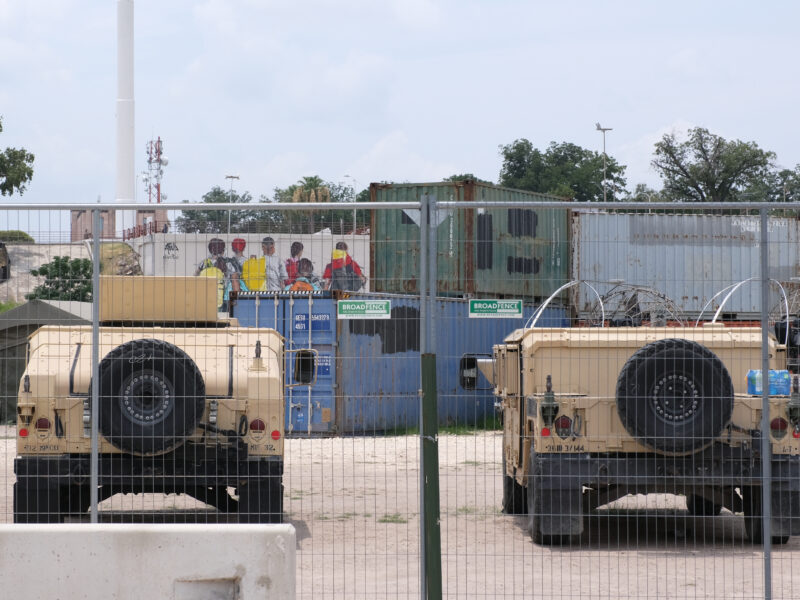
In September 2023, more than 2,000 migrants crossed into Eagle Pass in a single day, overwhelming the city's resources.
Then-Mayor Rolando Salinas declared a state of emergency. The Biden administration sent hundreds of military personnel to help process arrivals.
While the roots of Operation Lone Star may be political, there have been times like this when the border city did genuinely need state and federal help.
"Our communities needed assistance - we couldn't do it on our own," Eddie Morales Jr., a Democrat who represents Eagle Pass in the Texas House of Representatives, told Courthouse News. And in September 2023, he said Eagle Pass "was at the frontlines of the largest humanitarian crisis" he'd ever personally seen.
Since then, the record-breaking flood of migrants coming to Texas has slowed to a trickle.
Migrant encounters with Border Patrol are down significantly along the U.S.-Mexico border, falling from more than 300,000 in December to fewer than 10,000 in June. Political focus has also shifted from border communities like Eagle Pass, as the second Trump administration instead concentrates on deporting migrants already in the country.
And yet Operation Lone Star continues, as the fortifications and personnel in Eagle Pass make clear. Last year, Abbott opened Camp Eagle, a new base focused on border security. Rather than winding down operations and returning home, emergency personnel are becoming full-fledged members of border communities like this one.
Texas State Guard troops may be here for perpetuity - but that's not all bad news, Morales said.
"Our Texas Military are good people, and every interaction we have has been overwhelmingly positive," the lawmaker said. "They eat at family-owned restaurants and shop at our small businesses. If this is how it will be for the future, we must see those silver linings."
If Abbott found political opportunity at the border, Biden missed his chance to do the same, said Carolina Canizales, director of Texas campaigns and organizing at the Immigrant Legal Resource Center.
Instead of pushing back against Abbott's draconian policies, the administration took a more narrowly tailored approach, challenging Abbott's floating barrier under the Rivers and Harbors Act of 1899.
"The Biden administration and the Department of Justice did not have the courage to stand up to Abbott when they had the opportunity," Canizales said. "That resulted in more deaths, more human rights violations and more tax dollar waste for our state."
In the process, Canizales said the Biden administration left Eagle Pass to fend for itself. She argued Texas could more effectively address humanitarian crises on the border by investing in resources like infrastructure rather than just deterrence and punishment.
"I think Operation Lone Star is a policy of hate against immigrants and border communities," Canizales said. "It has brought so much pain and harm and death to these regions right on the border. It's not easy to recover from seeing people drowning because of the water buoys or to see everybody getting cut in the razor wire."
With Trump back in office and going after migrants, the situation in Eagle Pass appears to be in a holding pattern.
Governor Abbott has continued with Operation Lone Star, touting the program as a national blueprint. Volunteers and advocacy groups continue to fill gaps left by policymakers, and locals do their best to adapt.
It's been almost a year since Jessie Fuentes kayaked in the waters off Shelby Park. In the meantime, he's kept up his work teaching people about the Rio Grande. He hopes that someday, the razor wire and shipping containers will be gone. Then, he can paddle back into the river from Shelby Park and wave to his Mexican neighbors, just as he did before Operation Lone Star.
Source: Courthouse News Service