

With much of North America shivering under Arctic temperatures, power utilities and the United States gas industry are buckling under the impact of the climate extremes they've played a central role in bringing about.
In Canada, two women were found dead during wellness checks in Montreal as utilities in Quebec and elsewhere struggled with power outages. In the U.S., Texas Gov. Greg Abbott issued a disaster declaration across 134 counties, while a self-described "methane hunter" reported dozens of emissions "events" in the state's oil and gas industry.
"Remember: Oil and gas infrastructure is fragile. Any weather event causes problems," Sharon Wilson wrote on LinkedIn. "The oil and gas industry cannot survive the extreme weather it is creating."
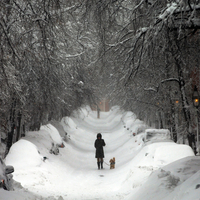
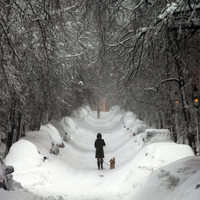
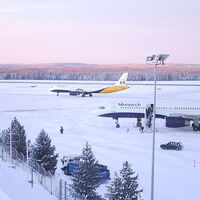
CBC reports "piercing cold", record-breaking lows, power outages, and hundreds of cancelled flights across much of Canada, with a map that shows weather alerts in 10 out of 13 provinces and territories as of Monday afternoon. "A polar vortex has blanketed much of the country in recent days, prompting Environment Canada to issue orange alerts for many jurisdictions-denoting that it believes severe weather is likely to result in significant damage, disruption, or health impacts," the news story states.
Montreal saw continuing power outages, with two women found dead during separate wellness checks in the Notre-Dame-de-Grace and Montreal West neighbourhoods. Atlantic Canada has seen a week of heavy snow, with provincial utility Nova Scotia Power reporting record electricity consumption and "localized issues and outages". Newfoundland & Labrador Hydro said its Bay d'Espoir hydropower plant was gradually coming back online Sunday after divers removed ice sheets "the size of mattresses" from the equipment. The utility warned households they might still face rotating power shortages.
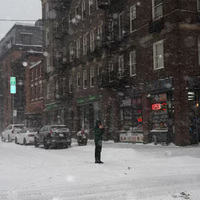
In the United States, the remaining staff at the National Weather Service (NWS) reported "life-threatening" conditions across the country as a dangerous winter storm killed at least seven people across four states, closed schools and roads, cancelled more than 11,000 flights, and cut off power to at least 800,000 households. the British Broadcasting Corporation reports. "The snow and the ice will be very, very slow to melt and won't be going away anytime soon, and that's going to hinder any recovery efforts," said NWS meteorologist Allison Santorelli.
"The polar vortex-a ring of strong westerly winds that form above the Arctic every winter containing a pool of very cold air-led to the powerful storm," BBC writes, in a news item that also included a working definition of "freezing rain" for UK listeners and readers. "When the winds are strong, they stay in place, however when the winds weaken, the vortex loops further south and cold air plunges toward [southern Canada and] the U.S. As the cold air meets mild air in the south, the air rises and storm fronts form."
Even more in the U.S. than in Canada, energy infrastructure was vulnerable to the extreme cold-and consumers faced spiking fossil energy prices before the worst of the storms even hit.
"Natural gas prices are already soaring as a potentially historic winter storm is expected to sweep through the country this weekend," Politico Power Switch wrote last Friday. "Customers could get slapped with record-high power bills as extreme cold, high winds, and blankets of ice, sleet, and snow threaten local power lines and the natural gas infrastructure needed to fuel gas-fired power plants."
Last Thursday, Politico said, a White House spokesperson "dismissed concerns about the potential for a natural gas price spike, which would add to the political storm the Trump administration is already facing over the rise in electricity bills associated with the buildout of artificial intelligence data centres."
Bloomberg News said gas prices had spiked 75% in three days-much to the delight of hedge fund investors who'd recently been moving away from those stocks. Reuters reported that the 67 million electricity customers in the PJM Interconnection grid, which serves the eastern and mid-Atlantic regions, paid more than $3,000 per megawatt-hour ($3 per kilowatt-hour) for electricity they consumed Saturday morning, compared to early rates below $200/MWh.
Bloomberg said more than 175 million people across the U.S. were facing intense winter conditions and extreme cold. By Monday, Politico reported, nearly a million households and businesses from Texas to Tennessee had lost power, "and that may just be the beginning," with temperatures "expected to fall below zero over the Appalachian natural gas fields that help supply heat and power" to the eastern U.S. "The deep chill could threaten to freeze critical equipment for producing and distributing a fuel that accounts for more than 40% of the eastern United States' electric power, and will test the industry's efforts to winterize its gear."
Over the weekend, Utility Dive writes, a series of emergency orders from the U.S. Department of Energy allowed grid operators in New England, Texas, and the mid-Atlantic states to waive air quality and other permit limitations to operate their available power plants at full capacity. In many jurisdictions, this type of order often involves heavily polluting diesel or natural gas "peaker" plants that are permitted to operate with fewer climate or other environmental controls on the basis that they'll be used in relatively short bursts to help a utility grid meet maximum demand, not for extended time spans.
Methane hunter Sharon Wilson said the Texas Commission on Environmental Quality had reported 29 "emission events" as of Sunday and 38 by Monday. On LinkedIn, she explained why malfunctions at the midpoint in the natural gas production process lead to major methane leaks.
"Upstream is where holes are drilled. Midstream is where the gas processing plants and compressor stations are. Downstream is where the power plants and LNG terminals are, and where distribution to homes [takes place]," she wrote.
"A midstream upset at a gas processing plant can cause everything upstream to become over-pressured because it is likely there is nowhere for the gas to flow. It's like putting a dam on a river. All the tributaries flowing into that river will flood because the water cannot flow downstream. Compressor stations push the gas through the pipelines from upstream facilities to the midstream processing plants"-and her post includes examples of the very large methane releases that result.
In a separate post, Wilson recalled the hundreds of Texans who died in 2021 when multiple generating facilities-mostly gas plants, but also wind, coal, and nuclear installations-tripped offline due to the extreme cold brought on by a winter storm. She asserted that one gas pipeline company "raked in $2.4 billion during the blackouts" and was later sued for "price gouging" by the municipal utility in San Antonio.
Not to be outdone, as much of the United States faced numbing cold, treacherous ice, and heavy snow, Donald Trump used social media to dispute that the world is warming, The Associated Press reports.
In a 25-word post on his "Truth" "Social "account Friday, Trump questioned how the world can be warming when it is so cold, and called the temperatures nearly unprecedented. He also called advocates and scientists "environmental insurrectionists."
More than a dozen scientists Friday told AP those claims were wrong, writes veteran science reporter Seth Borenstein. They point out that even in a warmer world, winter and cold occur, and they never said otherwise. They note that even as it is cold in the eastern United States (and across most of the northern half of North America), more of the world is warmer than average. They also stressed the difference between daily and local weather and long-term, planet-wide climate change.
Meteorologists also said global warming over the past couple of decades may make this cold seem unprecedented and record-smashing. But U.S. government records show it has been much colder in the past.
"This social media post crams a remarkable amount of inflammatory language and factually inaccurate assertions into a very short statement," said climate scientist Daniel Swain of the California Institute for Water Resources. "First of all, global warming continues-and has in fact been progressing at an increased rate in recent years."
Some research also links the relatively recent rise of the polar vortex to a weakened polar jet stream, brought on by a warming Arctic.
AP has scientists' specific responses to Trump here.
The last segment of this story was first published by The Associated Press and republished by The Canadian Press on January 23, 2026.
Source: The Energy Mix